
Write the idea. AURA writes the spec.
In natural language, by voice, or by attaching a document. AURA reads your repository context and generates the spec with problem, goal, and acceptance criteria — one version for humans and another ready to paste into your coding agent.
Included in every plan during early access · No charge until general availability
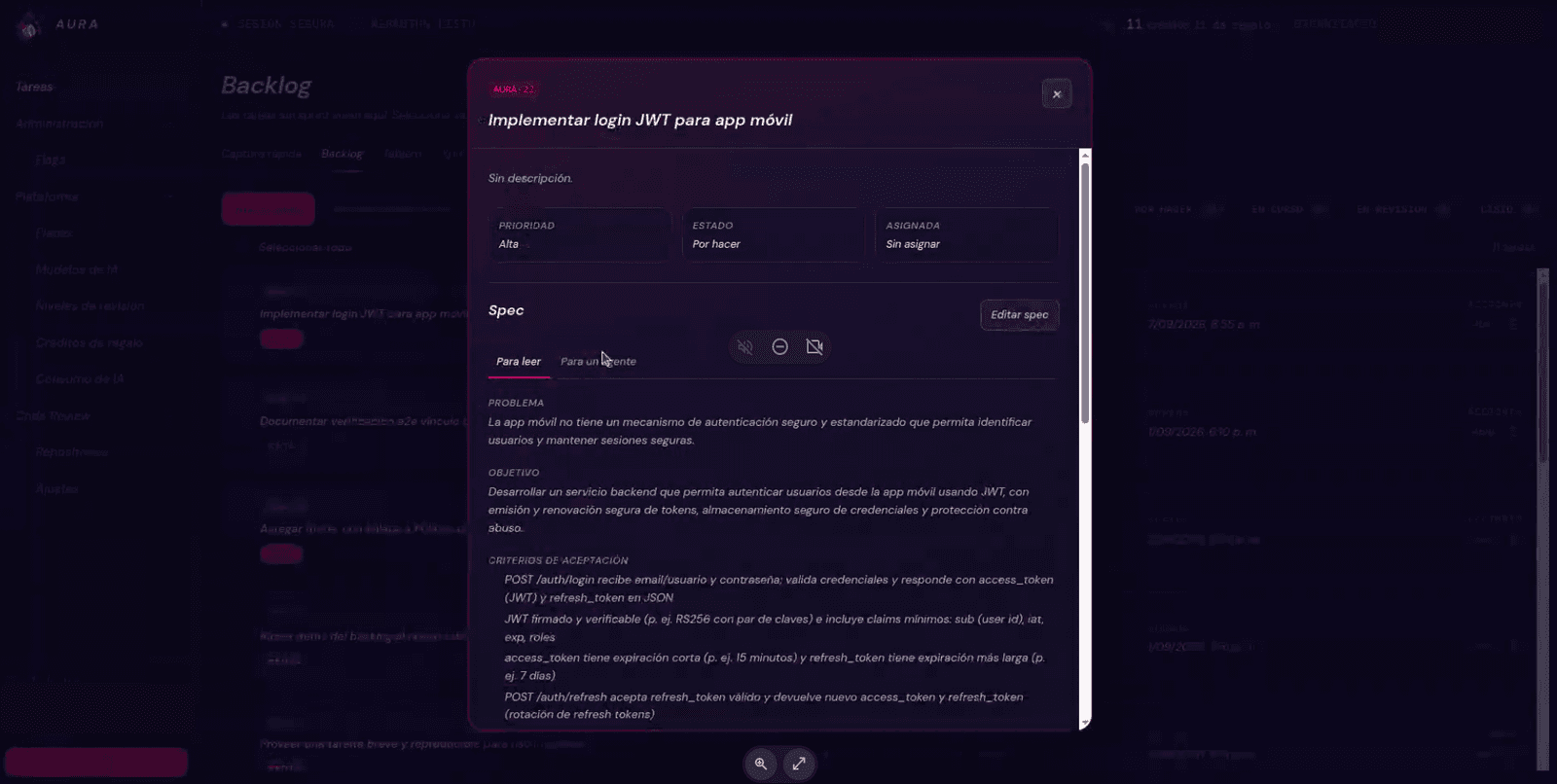
Spec-driven development, without asking anyone to write a spec.
Nobody writes specs. That is why AURA extracts and infers them: the spec is already in the idea, the ticket, the repository. Humans only confirm or correct.
“I want JWT login for the mobile app.”
That is enough. You can dictate it, type it with typos, or attach a document. AURA identifies the repository, reads its context, and in seconds generates the spec with its identifier.
- Text, voice, or attached document
- Connected repository context
- Specs with their own identifier (AURA-22)
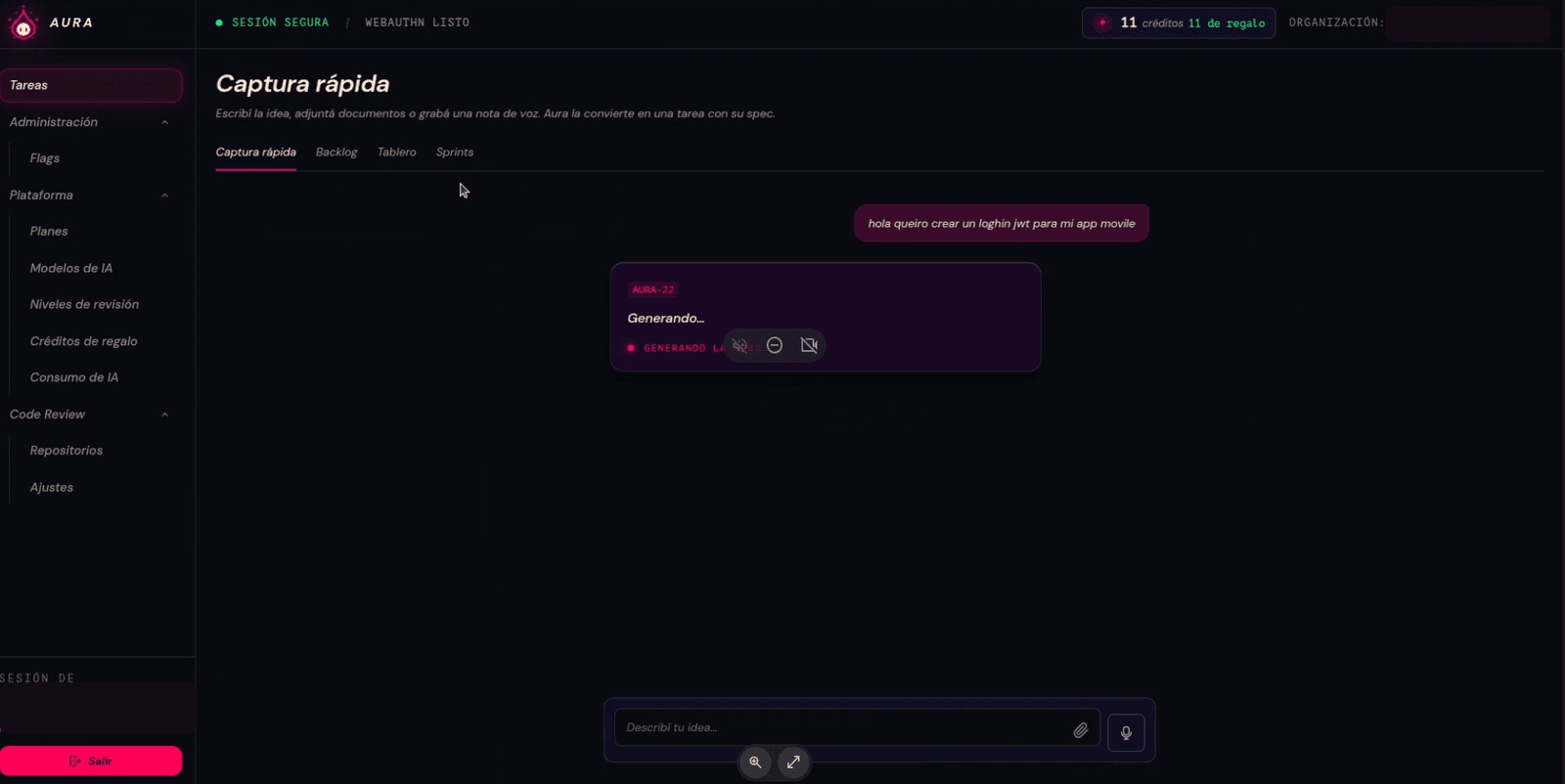
One version to read. Another for an agent.
The Scrum Master reads problem, goal, and acceptance criteria in natural language. The developer copies the agent version and pastes it into Claude Code, Cursor, Codex, or whichever environment they use. Same spec, two audiences.
- Problem · Goal · Acceptance criteria
- Technical instructions ready for the agent
- AI editing and one-click confirmation
What you expect from a specs tool. Connected to the code.
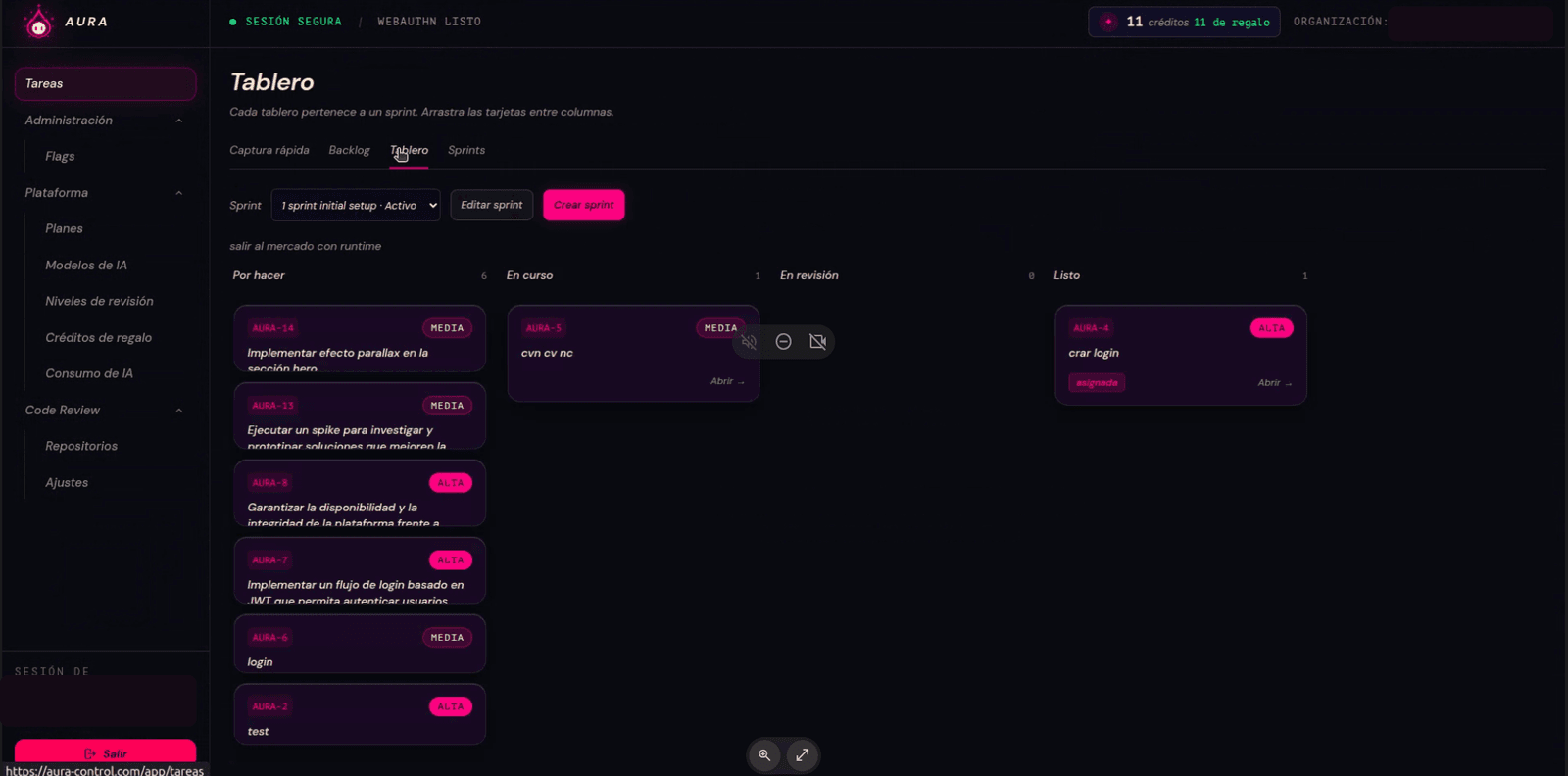
Backlog, status board, sprints with metrics by priority and by person. And the bridge no other tool has: when the developer opens the PR with the spec tag, Review inherits the spec and verifies that what was asked for was done.
- To do · In progress · In review · Done
- Real-time sprint metrics
- Automatic link spec → Pull Request → verdict
Already on Jira? You don't have to leave it.
Jira import arrives with Spec general availability (end of 2026). Bidirectional sync comes later, on Enterprise. Meanwhile, tag linking works the same with your current tickets: name the PR with the Jira identifier and Review recognizes it.
Import from Jira
Bring your epics and tickets into AURA to generate dual specs and connect them with Review.
Bidirectional sync
Status changes travel both ways. Your team keeps working wherever they prefer.
Tag linking
Name the PR with the spec identifier (AURA-118, PROJ-42) and the verdict verifies intent.
Use it today. No charge until it is fully ready.
Spec works and we already use it daily. We label it “early access” because Jira and the final credit structure are still missing, and we don't charge for what can still change. When general availability arrives, you keep all your work.